


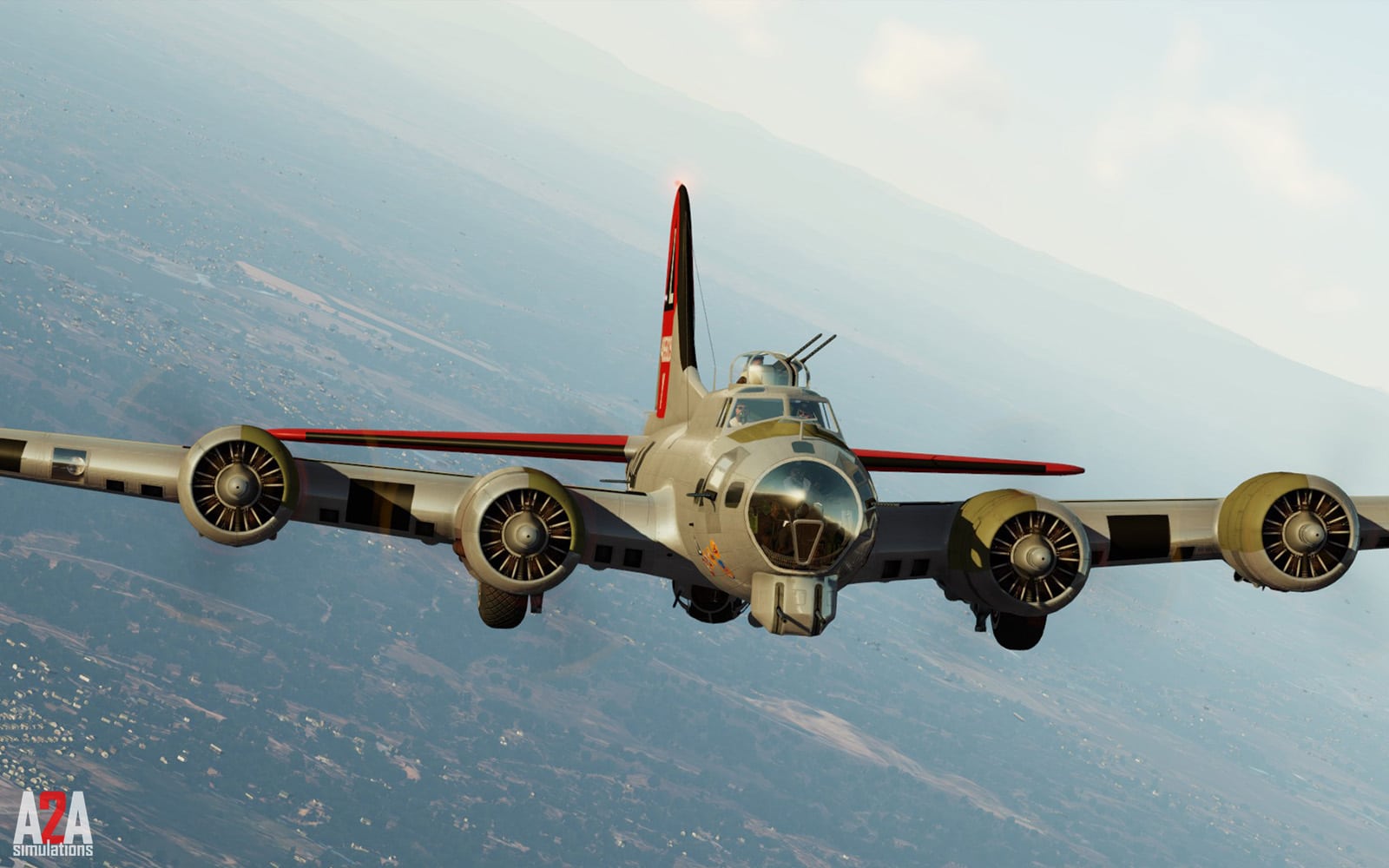
Mögen sich die Geister scheiden ob ein Bomber ein adäquates Weihnachtsgeschenk ist. Tatsache ist jedoch, dass mit der B17G von A2A Simulations ein weiterer Klassiker für P3Dv4/5 konvertiert wurde. Und für jeden, der in die Technik der damaligen Zeit einsteigen will oder eben die B17 seit langem im P3Dv4/5 vermisst, werden die Feiertage sicherlich ein wenig kurzweiliger werden. Die Featureliste ist lang und umfangreich, wie es sich für die systemtiefen Addons von A2A gehört. Wer sich noch weitere Geschenke aus dem hause A2A machen will, dem kommt der derzeitige XMas-Sale im A2A Store gerade recht.
Maintenance Hangar
Written crew chief inspection reports
Engine diagnostics allow you to look inside the engine at individual cylinders and accessories
Your mechanic can change oil, fuel and air filters for you
Tires can wear and even blow
Physical oil, fuel, hydraulic fluid, and even glycol systems work and are managed by your maintenance crew
Your mechanics can repair turbos, superchargers, starters, generators, magnetos, carburetors, and even tighten down intakes
Accu-Physics
Sound and physics seamlessly fused together. Gradually crack open a window and hear / feel the wind as it enters the cabin
Big radial engine start ups. With all cylinders modelled, starting an engine results in realistic sputters, kicks, coughs, and an engine that builds momentum to eventually fire up with a nice big BROOOOOM!
Manage an electric system that has 4-8X the capacity of the average three-bedroom house. Lights, gear, flaps, bomb bay doors, turbos, fuel pumps, radios, etc. all rely on engine generators, batteries, and an on-board APU installed in the rear. Even surges occur when large motors like the flaps are run. Listen and see how all these systems operate together.
Front pilots panel mounted on shocks. You can see engine’s subtle (and not so subtle) vibrations, that shake the airframe.
Crew Assistance
Order your co-pilot to manage your engines
Bombardier opens and closes bomb bay doors from the nose
Radio man scans the skies for interesting broadcasts
Waist gunners watch the flaps and can even be ordered to start or stop the on board APU
Tail gunner lets you know when the tail wheel is up or down
Order the crew to hand crank landing gear or flaps
New internal cockpit lighting system includes fluorescent lights and glow-in-the-dark radiant gauges
Real-time fuel management including fuel transfer pump and gravity-fed Tokyo Tanks for long range
Two fuel grades (100 / 91 octane) and three oil grades available for proper cold and hot weather operations
Fourth Generation Accu-Sim lives and breathes under the hood
Piston combustion engine modelling. Air comes in, it mixes with fuel and ignites, parts move, heat up, and all work in harmony to produce the wonderful sound of a big radial engine. Now the gauges look beneath the skin of your aircraft and show you what Accu-Sim is all about.
Airflow, density, and it’s temperature not only affect the way your aircraft flies, but how the internal systems operate.
Real-world conditions affect system conditions, including engine temperatures and authentic cowl flap management.
Use intercooler flaps to cool Carburettor Air Temperatures (CAT), as high temperatures can adversely affect engine performance while low temperatures can lead to carburettor icing.
Spark plugs can clog and eventually foul if the engine is allowed to idle too low for too long. Throttling up an engine with oil-soaked spark plugs can help clear them out and smoke will pour out of exhausts as oil is burned off.
Overheating can cause scoring of cylinder head walls which could ultimately lead to failure if warnings are ignored and overly abused.
On hot summer days, you will need to pay very close attention to your systems, possibly expediting your take-off to avoid overheating due to radiant ground heat.
Accu-Sound now allows for a direct connection to the Accu-Sim and P3D physics engine with airflow through the airframe, windows, structural creaks, bumps, jolts etc. with over 500 sounds in all.
Engine vibrations travel through the airframe. Front pilots panel is mounted on 6 shock mounts.
Authentic component drag. Drop your gear, deploy your flaps, or just try a dive, and listen to your airframe. It’s all there and it’s all real.
System failures. For example, if you deploy your flaps at too high of a speed, you will likely hear the flap motor stressing against the forces. Using bad habits like this can lead to a shorter life of components.
Total audible cockpit made with recordings from the actual aircraft. Before you fly, enjoy clicking everything.
Primer system modelled. Accu-Sim monitors the amount of fuel injected and its effectiveness to start the engine. Roughly 2-4 shots needed in hot weather and 4-8 in cold weather.
Authentic battery. The battery capacity is based on temperature. The major draw comes from engine starting.
Oil pressure system is affected by oil viscosity (oil thickness). Oil viscosity is affected by oil temp and oil dilution level. Now when you start the engine, you need to be careful and not raise RPM too much until oil temp is high enough to give proper oil pressure. If you raise RPM too high on a cold engine, especially very cold, oil pressure can raise to over 150psi. Oil pump failure can result. Also, extended inverted flight (negative g) can uncover the oil sump and reduce oil pressure. Do not fly in a negative g situation for more than 5 seconds.
Oxygen starvation (hypoxia) is modelled. Just take off and climb without oxygen to see.
Experience realistic start-up’s with an authentic inertia starter. Wind it up and engage.
Authentic engine sounds. When possible, we visit and fly the actual aircraft, capturing every area that makes sounds, namely the engine and how it not only sounds inside and outside, but based on where you are outside. We also have sounds to indicate how your engine is performing. For example, it may cough if the cylinders start getting fouled, or you may hear components start knocking when pushed too hard. This all contributes to you, the pilot, knowing your aircraft and how to read how it is functioning throughout every flight.


Gekauft 🙂 Danke für die News!